
Differences in Load–Velocity Profile Between Powerlifters and Experienced Gym Exercisers


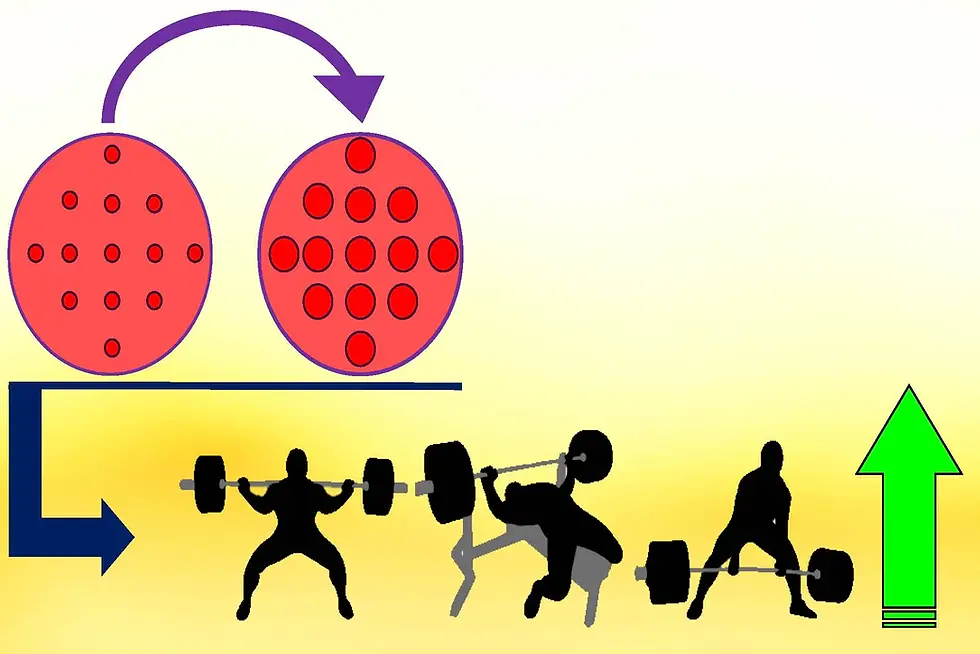
Purpose: The purpose of the study was to investigate the load–velocity relationship between powerlifting athletes (PL) and experienced gym exercisers (EE), in squat (SQ), bench press, and deadlift (DL), and to examine whether this relationship is influenced by the size of the muscle mass. Methods: Nine PL (age: 29.62 [7.54] y, height: 1.77 [0.05] m, mass: 92.52 [13.37] kg) and 8 EE (age: 23.54 [4.64] y, height: 1.85 [0.05] m, mass: 89.31 [13.14] kg) participated in the study. Data collection occurred over 3 nonconsecutive training sessions and included body composition via DXA, maximum strength (1RM) for SQ, bench press, and DL and the calculation of the load–velocity profile using external loads starting from 30% to 100% of 1RM for all lifts. Results: No difference was found for lean mass between groups (P > .05). Mean velocity at 1RM in DL was lower for PL (P = .033). Velocity at 1RM (meters per second) in SQ was moderately correlated with trunk’s lean body mass (r = .685, P = .042) in PL, while in EE, the velocity at 1RM in DL was highly correlated with total lean body mass (r = .801, P = .030). In the PL, 1RM was overestimated by a mean 3.6%, 2.0%, and 1.6%, while in the EE group, 1RM was overestimated by a mean 2.8%, 1.4%, and 0.02% in SQ, bench press, and DL, respectively. Conclusions: The load–velocity relationship may estimate performance in PL with relative accuracy, and it is suggested that this relationship may be used for tracking the daily adaptations of training loads and for competitions.

Σχόλια